
The market believes there will soon be another offer to buy the bonds.

The rate of price rise in food items stood at 17.14 per cent in the corresponding week of 2010.

Inflation, as measured by the Wholesale Price Index, was 6.87 per cent in July.
Food inflation, as measured by the Wholesale Price Index, was on a declining trajectory for the previous three weeks.

Food inflation stood at 20.18 per cent in the comparable period last year.
As per data released by government on Thursday, price of pulses became cheaper by 5.63 per cent year-on-year.
Former finance minister P Chidambaram on Friday rejected Finance Minister Arun Jaitley's contention in Lok Sabha that UPA government left behind double digit inflation.

Inflation may touch the six per cent-mark by the end of this fiscal due to surging food prices and decline in agricultural output, research firm Dun & Bradstreet said.

Meanwhile, inflation of non-food articles was at 15.50 per cent for the week ended July 9, compared to 15.20 per cent in the previous week.

As per the official data released on Monday, inflation in food items was 9.94 per cent in March, as against 6.07 per cent in February.
Higher prices of food products and some manufactured items pushed up inflation to 3.21 per cent for the week ended November 17, against 3.01 per cent a week ago.

The rise in inflation based on wholesale prices in October from 9.72 per cent in September was mainly on account of higher prices of fruits and vegetables, manufactured goods and petrol.

The Planning Commission on said food prices will come down in the next two months easing the overall inflation, which is currently at over 8.5 per cent.

The wholesale price-based inflation fell after rising for four consecutive weeks. Inflation was at 17.97 per cent in the previous week.

The Bharatiya Janata Party notes with dismay the fact that the consumer price inflation in India today is the highest among all the countries of Asia-Pacific.
Food inflation is back in double digits after a gap of a month-and-a-half and stood at 10.60 per cent for the week ending October 8 on the back of costlier vegetables, fruits, milk and protein-based items.

Inflation, as measured by the Wholesale Price Index, stood at 9.78 per cent in August.

The rate of price rise in food items, as calculated on the basis of the wholesale price index, was 8.53 per cent in the previous week and 21.46 per cent in the comparable period of 2010.
Core inflation, a measure of demand-side pressure on prices also rose sharply in March.

The wholesale price index-based inflation, which neared double-digit level in February, has probably peaked and was likely to decline as the country expected a good winter crop and drop in oil prices, RBI Deputy Governor K C Chakrabarty told reporters on the sidelines of a function in Bangalore on Monday.
Vegetables tend to get damaged faster during summers.

Inflation based on the Wholesale Price Index (WPI) stood at 6.84 per cent in February. In March, 2012, it was 7.69 per cent.
RBI Governor Raghuram Rajan on Friday said repo rate has been hiked as inflation pressures remain high.
The wholesale price index stood at 6.21 per cent during the corresponding week a year ago. Prices of maize, arhar and moong declined by one per cent each. However, prices of fuel remained unchanged at the previous week's level.

Wholesale Price Index-based inflation declined to 6.62 per cent in January, however, retail inflation remained in double digits at 10.79 per cent during the month.
For the first time since the new wholesale price index\nseries started in 1995, India's annual rate of inflation turned negative, falling to\nminus 1.61 per cent for the week ended on June 6.

Wholesale price-based inflation, which dipped to sub-zero levels following the impact of the global crisis, has started firming up and rose to 7.3 per cent in December, 2009.
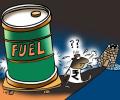
Inflation in 'fuel and power' basket rose sharply to 11.22 per cent in May from 7.85 per cent in April as prices of domestic fuel increased in line with rising global crude oil rates.
Inflation rose to 4.96 per cent for the week ended July 1 from 4.84 per cent
Food inflation fell sharply to a near four-year low of 1.81 per cent for the week ended December 10 as prices of essential items like vegetables, onion, potato and wheat declined.
According to data released by the government on Thursday, onions became cheaper by 39.20 per cent year-on-year during the week under review, while potato prices were down by 15.75 per cent.
Inflation has risen to -1.21 per cent for the week ended July 4 against -1.55 per cent the previous week.

Ahead of the monetary policy review on May 3, Reserve Bank of India (RBI) Deputy Governor Shyamala Gopinath said inflation was a concern, mainly on account of the high prices of non-food manufacturing goods.

The region witnessed a bumper potato crop of 9.5 million tonnes -- 73 per cent higher than last year's production. Wholesale prices in Kolkata crashed to Rs 300 a quintal. Retail prices, too, dropped to Rs 6-8 a kg. Farmers were forced to sell their produce at Rs 3-3.50 a kg, almost half of last year's price.
Inflation rose to 5.3% for the week ended November 4 from 5.09% in the previous week mainly due to increase in the prices of food and manufactured items.
Eggs, meat and fish also became 13.36 per cent more expensive on an annual basis, while cereal prices were up 4.13 per cent.
The wholesale prices-based inflation stood at 0.48 per cent in the previous week. However, in the corresponding week a year-ago the rate of price rise was 8.57 per cent. Among manufactured category sugar, imported edible oil and oil cakes became expensive.
Food inflation surged to a four-and-a-half month high of 9.90 per cent during the week ended July 30 on the back of costlier onions, fruits, vegetables and protein-based items.
Inflation has dropped to 0.48 per cent for the week ended May 2 from 0.70 per cent in the previous week.
Kartaar Singh, a farmer of Mokha village in Punjab's Kapurthala district, used to travel about 50 km on his scooter to Jalandhar's new sabzi mandi, or wholesale vegetable market, to sell his vegetables every day.
 © 2026 Rediff.com - Advertise with us - Disclaimer - Privacy Policy - Sitemap - Feedback - About us - Terms of use - Grievances